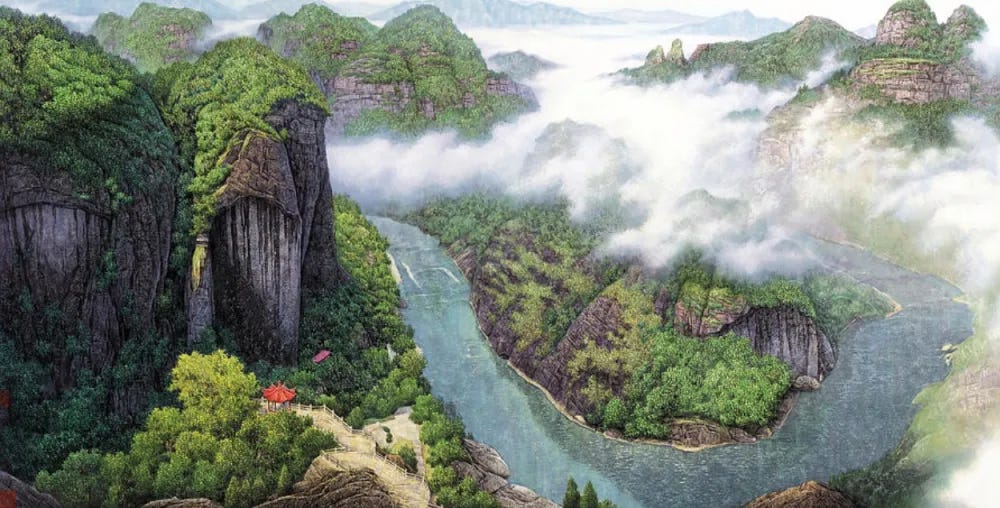
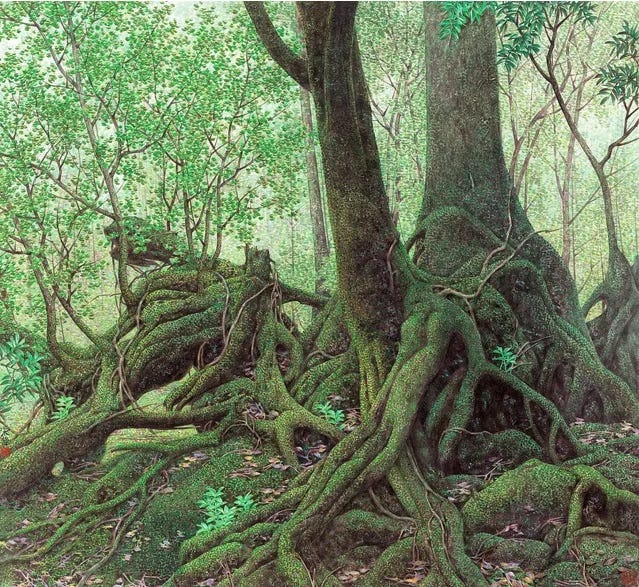
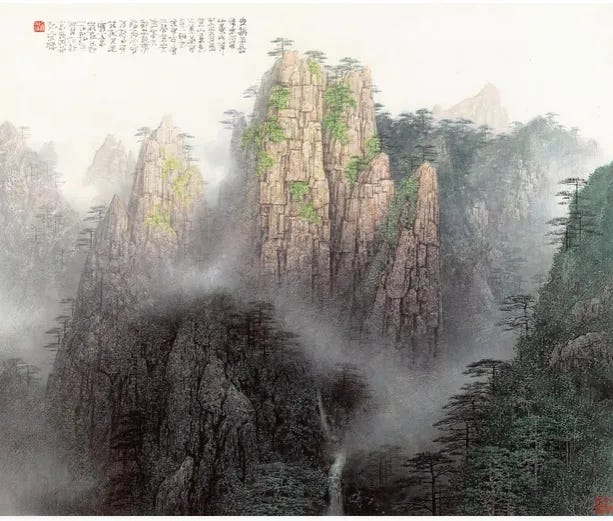
By Matthew EhretIt is rare to see new artistic movements arise. It is even rarer that such artistic revolutions manage to respect the best traditions of the past while at the same time infuse something new and improved into society. The fatal error made by many innovators attempting to break with the often stultifying force of custom and tradition, is found in a fetish for novelty, and a tendency to skip steps. How often have we seen the abstract impressionist paint splatterings, post-modernist chicken scratch or atonal randomized sounds performed by artistic reformers whom we are told by “authorities” are brilliant. On closer inspection, we often discover that those novel reformers either deconstructed their former technical skills to randomized incoherence, or who never even bothered to learn the basic skills of their art which they desired to destroy. This pandemic of novelty has created generations of young artists who aspire to ascend new mountains never before climbed without first having mastered walking up a hill. In recent years, fresh artistic currents have arisen in China which have avoided the disastrous cult of novelty by synthesizing the best of many traditions from both eastern and western sensibilities and techniques in order to create new wholes that are inarguably more than the sum of the parts. One absolutely inspiring example of this creative process now underway is Song Di, a Beijing-based painter born in Mouping County (Shangdong Province) in 1945 who has brilliantly taken Chinese aesthetics into a fresh domain breaking with the typically monochromatic, and simple ink brush styles that characterized the traditional rice paper landscape paintings for eons. Song Di’s style has innovated intricately detailed, multicoloured landscapes while still expressing a simplicity and soul emblematic in Chinese painting.
At the heart of his power to shape a new style has been his emersion into western artistic techniques with a focus on impressionist landscapes:
Breaking with those who think that painting must either be bound to the literal copying of “objective nature”, or the purely “subjective” inner expression of the self without regard for nature’s outward truth, Song Di states:
Striving to imbue the spirit of the new multipolar paradigm ushered in by the renewal of the ancient silk road uniting diverse cultures together in a new common web of interconnectedness and sharing, Song Di is quick to remind artists that they have responsibilities to humanity, saying:
Does the speaker thus mean that the artist must cater to the popular tastes of the era regardless of the level of mediocrity prevalent in popular culture? Does he mean that Chinese artists must only focus on China’s culture? Not at all. For Song Di, the challenge is to uplift all of humanity to resonate with the entire universe while still holding onto one’s own particular heritage localized in space and time:
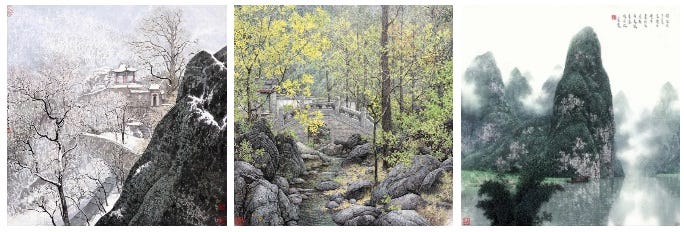
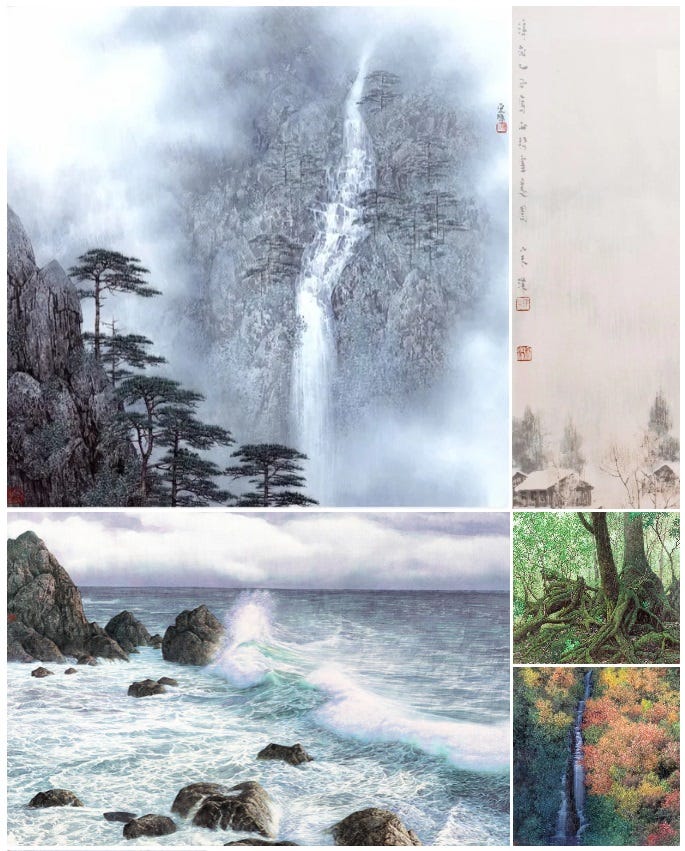
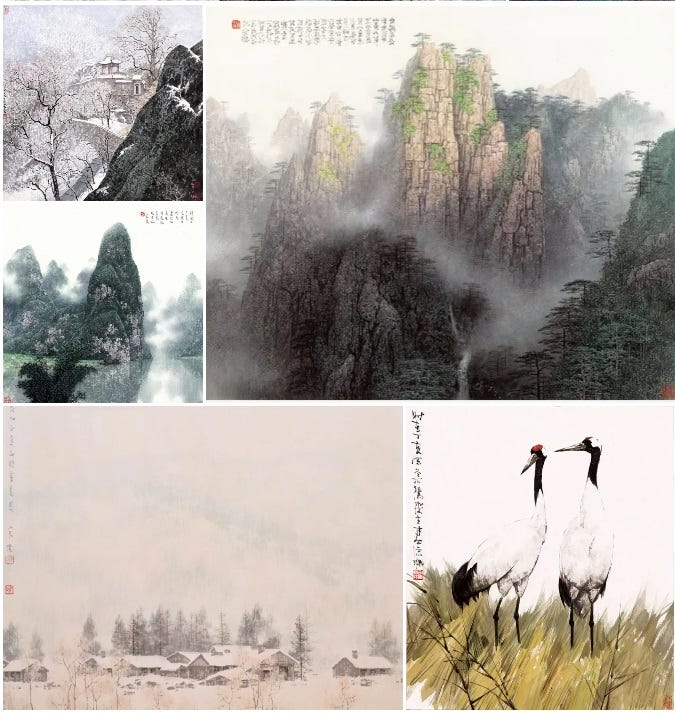
A sample gallery of some of Song Di’s most popular works
The Rising Tide Foundation is a non-profit organization based in Montreal, Canada, focused on facilitating greater bridges between east and west while also providing a service that includes geopolitical analysis, research in the arts, philosophy, sciences and history. Consider supporting our work by subscribing to our substack page and Telegram channel at t.me/RisingTideFoundation. You're currently a free subscriber to Rising Tide Foundation. For the full experience, upgrade your subscription.
|
Tuesday, December 30, 2025
Sparks of a New Renaissance in Painting Emerge from China




Subscribe to:
Post Comments (Atom)
Le Grand Charles: De Gaulle’s lessons for the Survival and Renewal of Europe in the 21st Century
What does Charles De Gaulle have to teach us to restore world peace, prosperity and security as well for the renewal of the West in the 2...

-
Boundaries are the backbone of respect. ...
-
Yernasia Quorelios posted: " In the dream, I was queued with my friends waiting to be seated at a formal dinner that wa...
-
The quiet work always shows up eventually. ...


No comments:
Post a Comment