|
Sunday, October 25, 2026
who are you when things aren't going your way?


Monday, October 19, 2026
How China Escaped Shock Therapy: Zhao Ziyang’s Controlled Opposition, the CIA’s Operation Yellowbird, George Soros…

How China Escaped Shock Therapy: Zhao Ziyang’s Controlled Opposition, the CIA’s Operation Yellowbird, George Soros and Tiananmen SquareFirst Instalment of Part III in the series: The True Origin’s of China’s ‘Social Credit System’
A note to readers: I thought it best, before people began reading this paper that I make a few points clear in terms of my intention in writing this paper, and this series more broadly. Many readers will be aware of my work mapping out western intelligence, including military and paramilitary affairs that have occurred historically that continue to shape our world today with global consequences, such as Operation Gladio, to which Operation Condor is a branch, and historical characters who stood in opposition to this. I view this present series as a direct continuation of this work. This paper will focus on how China escaped shock therapy (barely although not fully) which I view as a very good thing. The true track record of shock therapy has spoken for itself by now and is well documented in such books as ‘The Shock Doctrine.’ Because shock therapy was literally thought of as a “prescription” that should be given as a “cure” to a sick economy, with namely four steps of “shock”, its consequences are not only very apparent but quick to appear as effects. Shock therapy is the most rapid form of economic reform, and thus its real effects can more clearly be attributed to its set “prescription” than many other schools of economics which take several years to decades to be implemented. Although this paper will be clearly critical of Milton Friedman’s shock therapy, as well as George Soros’ Delphic role in this story, I would like to make clear that I am writing this from ultimately the standpoint of a counter-intelligence paper. Economics can be used as a form of warfare. As ‘The Shock Doctrine’[1] makes clear, shock therapy, as the name implies, was brought in as economic policy almost always through brutal force (i.e. police, military) and the rule of a dictatorship, in the case of Latin America often a military dictatorship. The outcome was not “equilibrium” but the very opposite, an increase in poverty for the bottom rung and a massive increase in wealth for the few on top. In fact, Milton Friedman’s shock therapy is what allowed for the success of Operation Condor.[2] Thus, the battleground of economics is directly tied to the work I have already been doing, especially with relevance to my book The Empire on Which the Black Sun Never Set. I write this paper with a focus and clear critique on shock therapy tactics and its proponents in China. However, in this paper I do not discuss economics more broadly. In other words, I am not advocating for any specific school of economics[3] in this paper and it should not be read as if this is my intention. Rather, that whether we would like to admit it or not, China has a record of not only successfully avoiding the full brunt of shock therapy (which is a feat unto itself), but also managed to avoid the full brunt of a financial crisis that was sent their way through the shockwaves of the engineered 2008 crash (see Part II of this series) along with toxic P2P fintech loans that were once again engineered in Anglo-America which set off a destabilizing financial and banking crisis in China which reached a peak between 2013-2018[4] to which China once again was able to come out relatively unscathed. Thus, the intention of this series is to study how China has accomplished these feats, such that we gain an increased awareness of economic doctrine that has been, and in the case of shock therapy was always intended, to be used as an actual weapon against whoever foolishly adopted it. This is not to make broad sweeping generalised statements of “capitalism” or “free-market” or to champion a “pure” “socialism” as their superior. Rather, my intention in this series is to showcase that these words are largely insufficient as superficial definitions of an economic system that will truly serve the welfare of the people. By studying such case studies, I hope that this will add clarity to why that is the case. In a future instalment different schools of economics will be discussed more directly and in greater detail, however, from my perspective, no one holds the absolute answer to such questions and not any of the “ism” words or “fields” in economics has earned its name as “absolute champion” of the people. There is much we need to learn, and I hope these case-studies will shed further light on this. This paper is Part III in the series The True Origins of China’s ‘Social Credit System’:
When the People’s Republic of China was formed on October 1, 1949, an over century-long-war-torn China (First British Opium War 1839-1842, Second British Opium War 1856-1860, First Sino-Japanese War 1894-1895, Second Sino-Japanese War 1937-1945) was submerged in mass poverty. Though basic urban industrialization had been achieved by the time of Mao’s death, living standards for most of the Chinese population who were made up of rural people were still very poor and problems such as having access to adequate nutrition were still large issues that had not been fully solved. When Mao died, China, despite its industrial accomplishments in its urban sectors was still a very poor country. However, the story of how China entered the 20th century as an impoverished nation is often conveniently overlooked by Western historical accounts, quick to promote the idea that the Chinese were a backward nation that had failed to modernize - as if this were the reason why China suffered from mass poverty and found itself in an incredibly weak position on the world stage by the end of WWII. It is important that we give China the respect she deserves in economic prowess. China had been leading the world in GDP since the 1500s, followed by India. And in the 1800s remained far in the lead of the rest of the world in GDP. Its GDP only began to drop dramatically after a century of warfare was unleashed upon them by first, the British and then the Japanese Empire invasions. By the 1890s, China’s GDP dropped dramatically, during the First Sino-Japanese war, where a post-Meiji Restoration Japan invaded China and Korea, and went into an almost free-fall by the Second Sino-Japanese war that wreaked absolute mayhem on the Chinese people by the Japanese fascists. During what China herself has called her “Century of Humiliation,” China suffered multiple military attacks from both the British and the Japanese, as well as economic attacks. Even psyop warfare was used, such as the Taiping Rebellion (1850-1864). The Taiping Rebellion was clearly foreign instigated and was led by Hong Xiuquan who proclaimed himself as the younger brother of Jesus Christ.[5]
By the 20th century, China was in absolute shambles. That being said, it is important to note that the ancient economic practices that were first learnt from the lessons contained in the Guanzi which pre-dates the Qin Dynasty (f. 221 BCE), discussed in the prologue of this series, had remained to a significant degree in place. Despite there being no lack of violence used to force China to bend the knee during its Century of Humiliation - the most destructive acts of warfare were economic in nature. The ancient Guanzi teachings came under attack from the British imperial power, ‘following a “firm ideology, in fact an idée fixe, of the British traders in Guangzhou that all state regulation and all monopolies are pernicious”. In the first of the unequal treaties after China’s defeat in the First Opium War with the British, the Chinese government was forced to ban its ancient monopoly system that regulated the trade of salt and iron.[6] Wagner (1997)[7] sees this as the starting point of the decline of China’s iron industry.’[8] This was the beginning of the aggressive neoclassical economic debates, though as we can see not really much up for debate when you resort to firing cannons upon your “opponent.” The British Empire in their crusade for Free Trade had taken it upon themselves to denounce all state regulation and all monopolies as “pernicious,” except within Britain itself of course. The British incredibly took a moral tone in these matters as they proceeded to set up the Hongkong and Shanghai Banking Corporation (HSBC) to deal in their opium trade.
The Chinese state was told they could not intervene in the face of “free” trade. Ironically, or not so ironic if you view Chinese history through a longer scope, the Communist Party upon taking power began to reintroduce the teachings of the Guanzi into their economic polices in response to the raging inflation that they had inherited after the war with Japan and their civil war with Chiang Kai-shek. (For more on this story refer to the prologue of this series here.)
Contrary to what many westerners have been told, the debate after the Cultural Revolution was not a question of whether China should or should not reform economically. The greater majority if not all of China’s prominent political leaders during this period were in agreement that economic reform was an absolute necessity and that blind following of Maoist doctrine was not to be encouraged. It should be noted here that Mao’s death signified the end of the Cultural Revolution. One month after his death, the notorious Gang of Four were arrested who were responsible for instigating much of the violence and persecution that occurred throughout the Cultural Revolution (1966-1976). Thus, when Mao passed away, it was agreed upon by effectively all political leadership in China that the Cultural Revolution should end and that China was in a desperate need for economic reform. This opened the doors to what became an increasingly aggressive debate within China’s leadership throughout the 1980s, with radical pro free-marketers (including pro-big bang shock therapists) coming to increasingly dominate the discussion around China’s reform. This would end the 1980s with the infamous Tiananmen Square debacle which was not only the outcome of an internal debate within China on the question of reform, but also the instrument of a great deal of foreign interference including by George Soros’ Open Society which played a direct role, along with the CIA. This history will lay the groundwork for us to better understand the continued debate within China on the question of reform that would result in the P2P crisis of 2013-2018 and Jack Ma’s call in 2020 to effectively overthrow China’s banking system which will be discussed in Part IV of this series. Thus, the question amongst China’s leadership with the passing of Mao was not whether or not to reform, but how China should be reformed during the critical period of the 1980s. This series will attempt to tell this story in much of its multifaceted nuances, factional fights, and of course, foreign interferences.
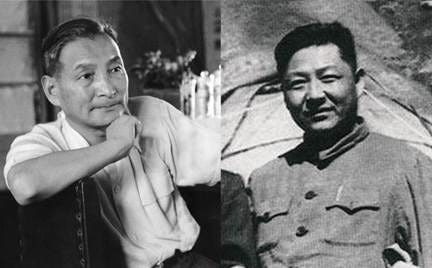
The World Bank Introduces China to Shock Therapists“Rising prices are not good, falling prices, too, are not good, for production. It is better to be groping for stones to cross the river more steadily.” - Chen Yun Deng Xiaoping would become effectively China’s President from 1978 until 1987. During this period two prominent economists that were pivotal to China’s economic reform were Chen Yun and Xi Jinping’s father, Xi Zhongxun, who were among the Eight Elders of China post-Mao.
In 1980, China officially joined the World Bank as part of its market reforms known as ‘reform and opening-up.’ Part of the dirty game the World Bank and International Monetary Fund like to play are contingencies to countries who are in desperate need of a loan. China proved no different. Their country was in desperate need of funds to facilitate essential development and the World Bank had access to those funds, but there would be a price to pay. China would need to heed the World Bank’s counsel on economic reform - which was a direct promotion of shock therapy. Counter to this World Bank counsel was Chen Yun. Chen Yun, who is denounced as anti-reform by some radicals of reform, was of the view that the market and a planned economy were not mutually exclusive and that guidance by state planning would prevent the market from becoming unstable. As discussed in the prologue to this series, this is not a new form regulation that was brought in by the Communist Party of China, but rather is a continuation of economic policy that dates back to ancient China, before the Qin Dynasty (f. 221BCE), known as the Guanzi economic teachings.
Chen Yun was thus pro-reform, as were all leading economists in China during this time, the question was one of speed of reform and whether or not and the degree to which the state should play a role. The more radical reformists were pushing for rapid reform in an almost all-or-nothing approach, for the state to be removed from playing any role and allowing the market to fully dictate by letting the chips fall where they may. Men like Chen Yun in China have repeatedly been wrongfully portrayed as anti-reform simply because they continued to support the state’s role in guiding reform. It was never about the markets vs state regulation as it is often misconstrued in modern economic narratives. As already discussed, China’s ancient economic teachings known as Guanzi, had always maintained that state regulation and markets should not be seen as separate and opposed to one another but can actually work harmoniously together. The debate of one or the other has always been a false one, and something that has been used to slander pro-reformers such as Chen Yun, who were never against pro-market reform. Chen Yun was of the position that it is the state’s responsibility to ensure the welfare of the people, an understanding that again dates back to the Guanzi and earlier, thus it was the state’s responsibility to ensure that essential goods were accessible and affordable to the people. The markets can play a role, but if essential goods become unaffordable or inaccessible to the people, it is the state’s responsibility to intervene accordingly. Again, this is a centuries-old practice in China. Thus, what Chen Yun was advocating for, in terms of gradual economic reform for China, was that the markets would be allowed the greatest liberty concerning non-essential goods, what are deemed “light” commodities in the Guanzi teachings. Reform would thus begin with non-essential goods, the plan being to slowly move towards more essential goods as China’s economy “gropes for stones to cross the river[9].” But that essential goods, deemed “heavy” commodities, were to remain under a degree of state regulation to allow the state to intervene if these essential goods became too expensive or inaccessible due to market volatility. As China further establishes herself in the markets, according to gradual reformers, this would then create a more stable environment to begin transitioning essential goods. In other words, the idea held by gradual reformers such as Chen Yun was that as China moves gradually into the global markets, beginning with the most liberal pricing on non-essential goods, China would be able to transition smoothly without creating too much instability for the people. I know I might sound like I am repeating myself too much on this point, but unfortunately the false narrative has been hammered so heavily into place that I cannot stress the point enough, this approach to market reform is not a communist creation but was in fact a principal teaching of China that dates back to 221 BCE and earlier, that is, the role of the state over the market. It is this practice that allowed China to become a world leader in GDP for centuries and created economic stability. This is not, as it is often portrayed, some sort of dark conspiracy to prevent China’s economy from being so-called “liberated” through shock therapy, which as the name implies, actually acknowledges itself that pain and instability must occur before its promised “utopia.” Though, as we will see in this series, there are no case studies of shock therapy that can actually claim success in reaching this utopia. There is, however, one thing shock therapy can make an absolute guarantee on, with a 100% success rate, and that is the outcome of massive economic instability which has been followed in every case by massive political instability. One could say that this is the true intention of shock therapy – political instability that opens the doors to a foreign led corporate regime change with a great deal of similarity to Mussolini’s Corporatism.
Mussolini’s Corporatism had spawned out of Sorel’s National Socialism. In fact, Neo-Conservatism in the United States finds its origins in this as well, as I discuss in the above cited paper. It is for this reason that there was a great deal of support within the American financier class for Italian fascism. It is important here to remember not to get too caught up in “isms,” but rather to look more at the specifics in economic policy, for as we can see in just this short paragraph we find the words “corporatism”, “neo-conservatism” and “national socialism” jumbled together along with “fascism.” I encourage readers to read the above paper which is Chapter 13 of my book “The Empire on Which the Black Sun Never Set” for a detailed explanation of this history.
I bring this up here to showcase that there is a great deal of similarity to what Milton Friedman and the World Bank were proposing in their “shock therapy” to China, to that of Mussolini’s Corporatism and I don’t think this was a coincidence. I will add further clarity on the similarities when I discuss Pinochet’s Chile and Brazil’s military dictatorship later on in this series. These case studies were in fact used as role models by pro-shock therapy reformers within China who happened to also be working closely with George Soros. Part of this grouping around Soros were also lead instigators of the Tiananmen Square debacle who received safe passage out of China under the protection of the CIA via Operation Yellowbird. It is also of interest to note that the advisers the World Bank brought in to their discussion with the Chinese on economic reform during the 1980s were all Eastern European figures who were at one point self-identified socialists but had since renounced socialism in favour of Milton Friedman’s shock therapy. Again, counter to this World Bank pro-shock therapy counsel was Chen Yun. Chen Yun had stated to the Government Administration Council of the CPC, back on April 7, 1950:
In other words, Chen Yun was for gradual reform where one could clearly see the results of certain reform measures and act accordingly: whether to finally adopt such reforms, readjust them or discard them. China’s situation was a unique one, and it was not simply a matter of “copying” what other countries had or were presently doing. On December 6, 1980, Chen Yun stated to the Central Work Conference:
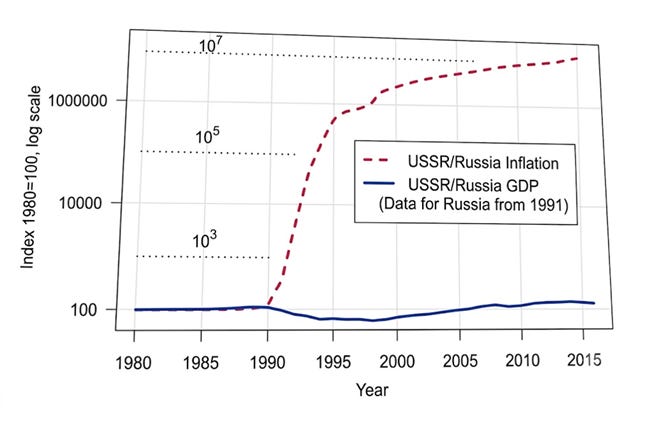
This approach of Chen Yun had remained dominant throughout the early 1980s where China would embark on gradual marketization rather than wholesale marketization, beginning at the margins of the economic system. However, increasingly, during this same time-frame authorities such as the World Bank were offering their “friendly” advice in return for approval of loans to the Chinese and this advice was growing in popularity. In China’s attempt to solve the price problem, the World Bank arranged for exchanges between Chinese established intellectuals and Eastern European émigré economists. ‘This dialogue between Chinese reform economists and their counterparts gave rise to one of the major competing approaches to market reform in China: the so-called package reform, which had radical price reform, the first step of shock therapy, at its heart.’[10] This package reform consisted of mainly four steps in its therapy of shock: (1) liberalization of all prices in one big bang (2) privatization, (3) trade liberalization, and (4) stabilization, in the form of tight monetary and fiscal policies (i.e. strict austerity). ‘The four measures of shock therapy, implemented simultaneously, should, in theory, form a comprehensive package. A closer analysis reveals that the part of this package that can be implemented in one stroke boils down to a combination of elements (1) and (4): price liberalization complemented with strict austerity.’[11] The joint report on The Economy of the USSR (1990)[12] by the International Monetary Fund, the World Bank, the Organization for Economic Cooperation and Development, and the European Bank for Reconstruction and Development urged,
Isabella Weber[13] [see footnote 13 for my disclaimer on Weber] writes in “How China Escaped Shock-Therapy”:
Isabella Weber continues:
The transformation of the economic system was steered at every step by the state. In contrast, big bang price liberalization under shock therapy caused a disorganization of existing production links without replacing them with market relations. ‘In this void, neither the old command structures nor the market operated effectively. For China, the defining question of the 1980s was not whether to reform – as the commonly invoked binary of conservatives versus reformers stresses. The question was how to reform: by destroying the old system or by growing the new system from the old.’[16] When the first World Bank mission arrived to investigate whether China was eligible for loans from the International Development Association, in October-November 1980, Chinese bureaucrats on the central and provincial levels presented the World Bank representatives with their views of the practice of price regulation and reform. The World Bank felt that China could somehow learn from lead socialist reformers from Eastern Europe who all had terrible track records of nothing but failure; who no longer thought socialism in any form was feasible; and also all happened to now subscribe to the economic doctrine of shock therapy. The disillusioned former socialist reformers Wlodzimierz Brus and Ota Šik, as well as the world-famous neoliberal Milton Griedman, were among the most influential early visitors. The first Eastern European economist to leave a deep impression on China’s reform economists was Wlodzimierz Brus. In 1972, Brus joined Oxford University, which offered refuge, but remained a place of exile. ‘In Oxford, Brus had two PhD students; one was Anders Aslund, a forceful proponent of big bang policies. Together with David Lipton and Jeffrey Sachs, Aslund would become advisor to the Russian government in the critical period of 1991-1994. The other student was Cyril Lin, the brother of the first World Bank Chief of Mission [to China] Edwin Lim.’[17] [18] Through the World Bank recommendation, Brus is invited to give lectures in China, where he hinted at many of the key elements of what later came to be called shock therapy.[19] Brus told his Chinese audience that instead of tinkering around with separate policies, he asserted, the Chinese should realize that economic reform meant transitioning from the old to a new system. Thus, reform would have to be implemented in one package; a piecemeal approach was, in Brus’s view, impossible.[20] Furthermore, according to Brus, Eastern Europe economists had reached agreement that only a change in the political system could ensure that reform was not reversed, thus preventing a return to the old system. Thus, political change had to be part of the package. This fact was kept consciously vague and underdefined during their meetings with the Chinese delegations. Wu Jinglian, who worked at China’s Economic Research Institute was smitten by Milton Friedman’s visit to China in September-October 1980. Friedman was among the first economists to visit China after they had opened up. Wu would later write that Friedman had shaped his own thinking in prices.[21] Wu was to become one of the foremost proponents of a big bang price liberalization in China in the mid-1980s. Ota Šik was another influential economist that first visited China in 1981. As the architect of the economic reforms of the Prague Spring, Šik hoped China would be inspired by his model of market socialism in Czechoslovakia. His reform included radical price liberalization and the abolishment of state planning. When the Warsaw Pact troops invaded Prague in August 1968, brutally ending the reform plans, Šik just happened to be on holiday in Yugoslavia. Fearing political persecution, Šik never returned to Czechoslovakia. He found exile in Switzerland, where he became a professor of economics at the University of St. Gallen.[22] Šik promoted to the Chinese complete price liberalization as the goal. Planning as the basic system must be replaced by the market. Wu Jinglian was put in charge of Šik’s 1981 visit. Šik told his audience during his lectures to the Chinese Academy of Social Sciences (CASS), that “I believe, the old planning system is incompatible with the market system; therefore it is impossible to maintain directive planning while adopting market regulation.” This meant reform had to entail abolishing mandatory planning, breaking up monopolies, and liberalizing prices.[23] ‘For Šik, there could be no socialism without the free market.’[24] Wu Jinglian recollected[25] that it was Zhao Ziyang who recommended that Šik become the first foreign advisor to the Chinese Academy of Social Sciences (CASS) and be invited to China annually. Zhao also wanted to arrange a discussion with the leading cadres in charge of economic reform. This took place on the last day of Šik’s visit.[26] Zhao Ziyang was the Premier of China from 1980 to 1987 and the General Secretary from 1987 to 1989. And he was at the center of the Tiananmen Square debacle in 1989 as we will see. Šik’s lectures were very influential amongst China’s reformers, and they began to heed his advice more closely on matters of how China should reform. Though these discussions were still at the level of research and not policy, things were moving along very rapidly. However, it did not take very long for Šik to sabotage this relationship to China on economic reform. It had come out in China about one year later that Šik had given an interview to the West German weekly Wirtschaftwoche just a few weeks before his first visit to China. In this interview Šik expressed his view that economic reform could not occur without an entirely new political system. Shock therapy was not only asking for the economy to be determined by the markets without state intervention, it was calling for an entirely new state to go along with it - though the actual details of what sort of state they envisioned for this new utopia they kept rather quiet about. Šik stated in this interview: “[The politicians in power] who understand very little or nothing about the economy and who live the old vision of the dictatorship of the proletariat, are very afraid that every liberalization and every change of the economic system towards enterprise autonomy and market orientation will undermine their position. In order to really make reform work, the party’s diktat over the economy has to be put to an end.”[27] It is interesting that such shock therapists as Šik, and Brus in a more indirect manner, were calling for putting an end to the “party’s diktat” over the economy. One wonders did they view Pinochet’s military dictatorship over Chile in the same light? It at first seems ironic, that shock therapists were so adamant, aggressively so, that the state “diktat” needs to be removed in order to “liberate” the economy, however, in the majority of cases (if not all cases) where shock therapy was adopted, a military dictatorship was necessary to enforce its policies against the outcries of the actual people. But the apparent irony of this soon fades away, when we understand that that was the end goal the entire time. To put in place a military dictatorship. Šik was never invited back to China, but his influence, including his proposal for price reform remained an important reference for the pro-package reform (shock-therapy) economists in China, such as Wu Jinglian. Reform, according to Wu Jinglian, could succeed only if power was decentralised. Impressed with Brus and Šik, Liu Guoguang (who was responsible for first inviting Brus and d Šik to China) and Wu Jinglian reached out to Edwin Lim, the chief of the World Bank China mission and proposed a conference to learn more from Eastern European economists. A delegation comprising mainly Eastern European émigré economists and World Bank officials convened with Chinese economists in charge of price reform. Lim had recruited Brus as a consultant soon after the World Bank’s mission began in China in 1980 and put him in charge of assembling a delegation predominantly made up of exiled Eastern European reformers.[28] Included in this grouping was Jiri Kosta, a childhood friend of Sik’s who had worked under him on economic reform at the Czechoslovakian Economic Research Institute and was in exile as a professor in Frankfurt, Germany. An important commonality among all but one of the invited experts was that they had lost faith in socialism. Here was a delegation of foreign experts, invited to help reform socialism, who for the most part held that socialism was not only unreformable but that shock therapy was the only true course for economic reform.[29] The Eastern experts, before having toured China, strongly recommended a “one package approach” that would reform all sectors at once, as quickly as possible. Effectively, they advocated the kind of big bang policies that later proved disastrous in Russia and Eastern Europe. Weber writes:
During these early stages of opening up, the Chinese were still predominantly in favor of gradual marketization. Economists such as Wu Jinglian, who were pro-shock therapy, were a minority group at the time. Thus, the World Bank and co. were making more radical suggestions of reform than the Chinese delegation were expecting and must have appeared quite unreasonable – since these Eastern European reformers were demanding a complete overhaul of China’s entire economic and political system all in one shot. The real question the majority of Chinese reformers were trying to answer at these meetings was by how much they had to change specific prices and what the effects on the overall price level would be – not whether or not to abolish their whole system of price regulation. Weber writes:
However, equilibrium in of itself is not a measure of anything. You can have an equilibrium in poverty just as you can have an equilibrium in wealth, to desire to achieve solely an equilibrium is not a measure of whether a system is actually prosperous. János Kornai was another prominent Eastern European pro-package reformer that was brought in to advise the Chinese on reform matters. Wu Jinglian first met Kornai at a conference in 1981 organized by the International Economic Association in Athens, which included prominent participants such as the Soviet mathematician Leonid Kantorovich and the Oxford economist Sir John Hicks, both of whom had won the Nobel Prize in the 1970s, as well as Herbert Giersch, who was soon to become president of the neoliberal Mount Pelerin Society. At this conference, Wu first met János Kornai. ‘Kornai shaped Wu’s thinking on reform, and Wu became Kornai’s greatest advocate in China, promoting the translation of his works. Both men had been champions of the respective orthodoxies in Hungary and China earlier in their lives and were now in the process of becoming radical market reformers with Wu, following in Kornai’s footsteps. This was before Kornai became a member of the Harvard University economics faculty, but by the time of their encounter in Athens, Kornai had already gained fame in the West.’[32] In Kornai’s book “Economics of Shortages” (1980) he blamed shortages on the nature of the system of a socialist planned economy. It followed that the only way to overcome shortages, in Kornai’s logic, was to get rid of central planning. This grouping of Eastern European advisers were notorious for laying on layers of circuitous theorizing so thick that it was difficult to pinpoint what were the exact points one should follow. Since all these men had in fact terrible track records when it came to applying economics in reality and not theory, they were very careful in their choice of words, and with any suggestion that encompassed some degree of actual specificity rather than broad sweeps of vague commentary, they made sure to quickly add a disclaimer here and there so that they could never really be held accountable for any actual policy that were to take shape from such meetings. There were many critics of Wu Jinglian’s “interpretation” of Kornai’s economics, whether or not he was loyally following the teachings of Kornai is up for debate, however, the agreement was that Wu Jinglian’s actual plan for price reform amounted to a recipe for disaster and created the risk of hyperinflation. In fact, as we will see, that is the only consistency in all these various theories that will be discussed in this paper, that were being brought forward by either pro-package reformers or Zhao Ziyang’s think tank the System Reform Institute, that hyperinflation was to be a sure thing. The Eastern European shock therapists urged the Chinese reformers to abolish their old multi-tiered price system, which was responsible for stabilising prices since 1949 and showed itself to be incredibly reliable in combating inflation and speculative attacks.[33] The multi-tiered price system was in fact a continuation of the ancient Guanzi principles of economy. I plan to do a more thorough overview of this in the future, but for now the essential idea behind China’s multi-tiered price system was a more differentiated or graduated pricing structure that often expanded beyond a simple binary split (plan vs. market) into three or more distinct price points based on volume, quality, or destination. In agriculture (such as the household responsibility system), this included the lowest price for base quota deliveries to the state, a higher negotiated rate for above-quota sales to the state, and a free-market price for crops sold independently at rural fairs. In industry, it could span planned prices, floating prices, negotiated prices, and free-market prices. The Chinese wished to continue with the multi-tiered price system in their “opening -up” gradual reform into the markets. What the Chinese meant by “gradual” or marketizing from the edges of the economy first, meant that they would allow prices to be liberalized to a certain extent for commodities that were categorised as “light,” in other words non-essential commodities. Things such as cotton, steel, iron, produce, food stock were considered “heavy,” essential for the basics needs of the populace and industry, and thus at the core of economic stability. These “heavy” commodities it was thought should continue under state regulation via their multi-tiered price system. The Chinese wished to reform, but not at the cost of stability to the people’s livelihoods. Although these Eastern European reformers had to admit that they had no successful track record to speak of in radical price reform, they nonetheless stated to the Chinese delegation that their multi-tiered price system was what was preventing China from a “proper” reform. That if China wanted to grow and “open-up”, the most critical economic practice that was standing in their way according to these “experts” was their use of the multi-tiered price system. The very price system that had in fact corrected the inflation that was wrecking havoc thanks to Chiang Kai Shek’s corrupt leadership, a price system that held an over three-decade-long-record of price stabilization. Ironically, the multi-tier price system was the only price system that actually had a very good track record amongst what was being suggested at these World Bank meetings. Because they had no proper economic legacy to speak of, but rather the very contrary, disastrous economic and political outcomes that opened the doors to military crackdowns and social instability, these Eastern European advisers did not feel “comfortable” advocating for an exact replica of what they did, however, the members in their non-committal way continued to advocate for package reform, an all-in-one shot. The details however were always murky, and their rules for how the system should theoretically work constantly changing. The only thing truly clear in anything these economists were saying was the goal, for liberalization into the markets. From my understanding, this as a goal in itself – liberalization into the markets - ensured that any radical step (i.e. rapid reform) one would take towards accomplishing this was to ensure economic and political mayhem. Chen Yun was leading China’s economic reform from 1978 to the early 1980s. By 1984, the supply of grain had increased to an extent that, for the first time, the planned price and the above quota state procurement price were higher than the market price.[34] In other words, in just a matter of a few years, Chen Yun had achieved a massive success in correcting China’s food shortage problem and had created a situation of abundance for the first time in many decades. Despite Chen Yun’s economic achievements for China during these critical years, support for the World Bank prescription of “modernization” was gaining popularity amongst certain Chinese intellectuals, no doubt who thought their pockets had much to gain. However, Chen Yun, who was among the Chinese Eight Elders post-Mao, was a man that the Chinese people still rightfully held tremendous respect for, and Chen Yun was not going along with the World Bank’s “advice.” By October 20, 1984, China’s Central Committee put the challenge of finding a rational system of pricing (with the goal of reform towards marketization) as a priority:
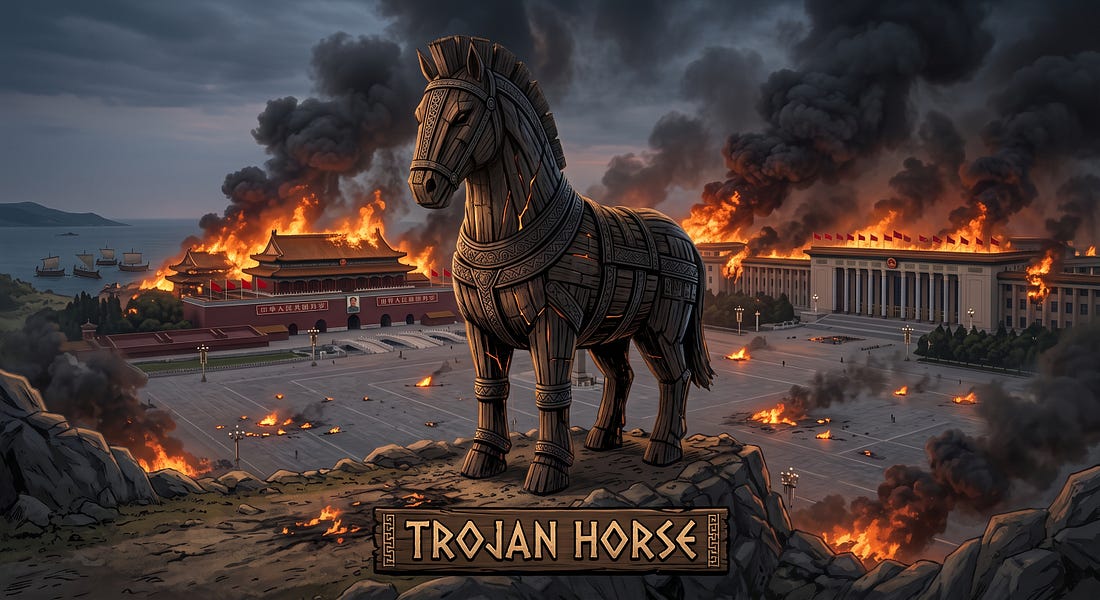
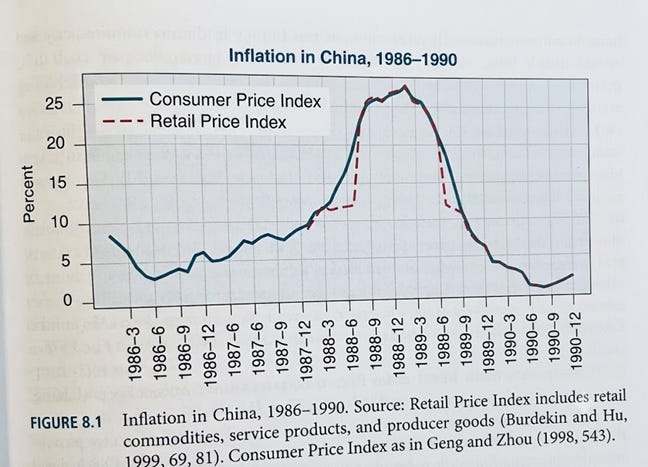
Since supporters of shock-therapy in China could not directly criticize Chen Yun, who was in the process of achieving great success for China in his approach to economic reform, they instead began to twist his words in an attempt to make it look like their version of gradual reform was in line with Chen Yun’s “groping for stones to cross the river more steadily.” The Trojan Horse would take the form of the proposed “dual-track price system.” In order to quell opposition to the pro-package reformers critique on China’s multi-tier price system, a “dual-track price system” was suggested as a form of “gradual” reform that appeared consistent, for those who didn’t know any better, with Chen Yun’s advocacy of growing the new system out of the old. It was put forward that the dual-track price system would act as the in-between, easing the transition from China’s multi-tier price system towards a full liberation of prices. However, this was not true. With history providing us with 20/20 hindsight, the dual-track price system was in fact a complete failure and had created, in a matter of just a few years, rampant hyperinflation and corruption that hit China in the late 1980s. This in turn created enough economic instability to foment the conditions that would result in the Tiananmen Square protests, as well as protests throughout Beijing. The Tiananmen Square debacle will be discussed in detail in the third instalment of the Tiananmen series, including the role of the CIA and Operation Yellowbird. It is important here to stress the point that the conditions for the Tiananmen Square debacle which was in fact about economic and not “democracy” issues would not have been possible without the introduction of the dual-track price system. For the first time in several decades, China was experiencing destabilizing levels of inflation which had created a domino effect of other very predictable reactions such as panic hoarding of essential goods. As already noted, price stabilization was one of the great successes of the CPC government which was due to their application of the multi-tier price system which was a continuation of the true principles of China’s Guanzi. The dual track price system held that a single commodity had two primary tracks—a low, fixed state-set price for quantities produced under mandatory state quotas, and a higher, flexible market price for surplus output produced beyond the plan. To maintain macroeconomic stability for state-owned enterprises (SOEs) and urban provisions while gradually introducing market incentives at the margin. The key differences between the two systems (multi-tier vs dual) is that the dual-track system broadly defines the coexistence of plan and market tracks, whereas the multi-tier system describes the specific graduated layers (often 3 to 5 pricing tiers) used to manage quotas, above-quota bonuses, and open-market exchanges within that transition. In other words, due to the “broad definition” of how the dual-track price system would function, it allowed a great deal of predatory and corrupt activity to occur in its various grey, that is underdefined, areas of policy. It effectively removed the precise control that was exacted by the multi-tier price system and left prices largely unregulated. The dual-track price system directly caused the hyperinflation crisis of 1988 through a combination of supply manipulation, a “soft budget constraint” credit boom, and severe psychological panic among consumers causing massive levels of panic hoarding. While it was intended to ease China into a market economy gently, the dual-track price system fundamentally uncoupled the country’s money supply from actual goods, creating a perfect storm for runaway prices. In addition to this it unleashed massive levels of corruption during this era, known as guandao (官倒), which translates literally to “official profiteering” or “official reselling.” The price differences within China’s dual-track and multi-tier pricing systems in the mid to late 1980s created some of the most pervasive corruption and rent-seeking loops in modern economic history. Because the state, under the dual-track system, artificially pinned “in-plan” goods at low prices while “outside-plan” market prices skyrocketed, anyone who could bridge that gap became rich overnight. This phenomenon led to unique structural abuses, market distortions, and widespread social unrest. Rather similar to the effects Perestroika had on the collapsed Soviet Union where overnight millionaire oligarchs were born and massive corruption boomed. The dual-track price system in China began officially formalizing into broader state policy by 1984. The key figures that brought the dual-track price system into official policy was Deng Xiaoping who served as China’s paramount leader from 1978 to 1989 and Zhao Ziyang who was Premier of China from 1980-1987. The dual-track price system became a national policy in China by 1985. While the chaos that would be unleashed with the “broadly defined” dual-track price system was in the process of coming to a boiling point, the pro-package reformers unleashed a wave of heavy criticism on the dual-track price system policy and continued to advocate that China get rid of any form of price regulation and liberate prices immediately, calling for a rapid transition to a “free-market.” Shock therapy economists such as Zhou Xiaochuan, who would later become a major figure in China’s banking system and would play a lead role in engineering China’s P2P fintech crisis (more on this in Part IV of this series), known as China’s “Father of Technocracy,” insisted along with the neoclassical economists such as Brus, that getting the prices right was most important for attaining equilibrium. Equilibrium in what qualitatively speaking is never defined of course. But that did not stop a young Zhou Xiaochuan with his colleague Lou Jiwei from concluding, full of optimism, that finding the “right price” would be possible, thanks to the advancement in computational techniques. This emphasis on shutting down one’s own mind and letting computer modeling run the financial system has a rather great deal of similarity with the P2P fintech crisis that would hit China two decades later. The P2P loan algorithms were also quite complex forms of fintech that began challenging China’s banking and financial system in a very serious way. Zhou Xiaochuan was the engineer of the P2P fintech loans who gave them the right to function as quasi banks. Fortunately, Zhou Xiaochuan and Lou Jiwei’s proposal for calculation-based price adjustments was rejected. It was understood that even if enterprises were to agree to such a large price adjustment, the risk of chain reactions was incalculable and would “certainly shock the entire economy.” If China had something to learn from the Eastern European and Soviet experience, it was that “there is in fact no one-time adjustment that results in an ideal rational situation.” The plan for one big adjustment, which would have amounted to a big bang in prices, whether calculated by a computer or not, were rejected. As a false alternative to pro-package reform, Zhou and Lou were proposing that rather than a full liberalization of prices, in a ‘let the chips fall where they may’ approach, that you have instead a computer model determine the “ideal” prices that would allow for a so-called “smooth” transition into a free-market. However, it was recognised by the Chinese economists that no computer model could do such a thing and would not have the ability to measure decisions on price with other factors that were necessary in determining a so-called “perfect” price adjustment. It was at the end of the day, no different from a big bang the shock therapists were proposing, except under the veneer of “science” using computer modeling that was treated as incapable of error giving a false assurance that radical price reform could occur without sacrificing economic stability. Zhao Ziyang was in fact very favorable to these pro-shock therapy developments and begins a youth group, what would amount to China’s first think tank which was named the System Reform Institute, formally founded and headed by Zhao Ziyang’s disciples Chen Yizi and Wang Xiaoqiang, the former playing a prominent role in the Tiananmen Square debacle. The dual-track price system was always supposed to be temporary, promoting a transition to eventual liberation of prices and so it appeared that Zhao Ziyang was simply doing his duty by overseeing the dual-track price system towards this very goal. George Soros, Zhao Ziyang and Shock Therapists UniteThe System Reform Institute (also called the China Economic System Reform Research Institute) is considered the first reform think tank in the socialist world, led by Chen Yizi and Wang Xiaoqing and was formally established in early 1985.[36] It was known as the reformist advisory board or “brain trust” of Zhao Ziyang. The Institute was shut down and its members dispersed in the aftermath of the Tiananmen Square debacle. As we will see, the Institute served as a form of controlled opposition to the pro-package reformers. By March 1986, Zhao had crystallized his vision for his next step: “Package reform is superior to reform by individual measures,“ Zhao told his personal Secretaries Bao Tong and Bai Meiqing.[37] In particular, Zhao suggested, just as Brus had, the situation of the coexistence of the two different prices for the same good could not last too long. If the conditions were found to be ripe, China should “take a decisive step in the next two years, and basically transition to a primacy of the new system.”[38] Zhao Ziyang was thus strongly in favour of the pro-package reform, i.e. shock therapy, road to Damascus after all. ‘Four days after his conversation with his secretaries, on March 15, 1986, Zhao addressed the National Work Conference on Urban Economic System Reform along the same lines. A package reform was the right approach, Zhao proclaimed.’[39] The prominent proponents of package reform who now joined the Program Office included Lou Jiwei, who had previously joined forces with Guo Shuqing to draft a proposal for radical price reform; Zhou Xiaochuan; as well as Liu Guoguang, who had worked closely with the World Bank to bring Eastern European economists such as Brus and Sik to China in the first years of reform. Wu Jinglian has pointed out[40] that this was the beginning of a close cooperation among this group that came to fruition under the presidency of Jiang Zemin and the premiership of Zhu Rongji in the 1990s and early 2000s, the period of China’s most neoliberal market reforms (more on this in Part IV of this series). The first reform proposal of the Program Office, titled “Basic Outline for Reform in the Next Two Years,” dated April 25, 1986, was drawn up within twenty-two days.[41] The Program was an expansion on Guo Shuqing, Lou Jiwei, Zhou Xiaochuan and others as well as promoted by the Eastern European reformers. The Program was fully in accord with Zhao Ziyang’s March 15, 1986 speech in which he had urged for the necessity of short-term pain for long-term gain. The Program argued for the “necessity and possibility of one big step” in reform within the next two years, stressing that the success or failure of reform would be decided in the course of the Seventh Five Year Plan (1986-1990). The approach was once more labeled a “package”.[42] Weber writes:
During this same period, the System Reform Institute was conducting “field experiments” and had concluded that a package reform (i.e. shock therapy) would destroy the core of China’s industrial economy without creating a market and continued to advocate for the disastrous dual-track price system instead, calling it a success. Meanwhile the dual-track price system was creating the groundwork, likely not coincidentally, for the very same early onset symptoms to the package reform “prescription” – that is, hyperinflation. The so-called “debate” in China became the very loud voices on one side of the pro-package reformers backed by the World Bank and Eastern European reformers and on the other side Zhao Ziyang’s youth think tank, the System Reform Institute which was supporting the continuation of the dual-track price system. Zhao Ziyang in the meantime was courting both sides. These voices would drown out those in opposition to both the package reform and dual-track price system, effectively Chen Yun’s group who saw both paths leading to disaster. This is how the System Reform Institute played its role as controlled opposition. By advocating for the “alternative” to package reform, to which the dual-track price system was made to appear as the only other feasible choice, the outcome would be the same – hyperinflation. Weber writes:
In 1986, China narrowly escaped a big bang. Confronted with diverse, authoritative warnings about the unforeseeable risks of imposing the shock of price reform and the uncertainty about its benefits, Zhao Ziyang ultimately gave up on package reform, although this would be short-lived. ‘In 1986, wholesale price liberalization was debunked by reform economists who believed in marketization but opposed a big bang. After Zhao Ziyang gave up on the reform blueprint, his program in 1987 and early 1988 was to combine enterprise contracting with a new coastal-development strategy. This constituted an internationalised version of gradual marketization from the margins and the dual-track system.’[45] Weber writes:
I think that the direct involvement of the CIA in Operation Yellowbird and the fact that they actively took it upon themselves to provide an escape for individuals such as Chen Yizi, showcases that this was not just a matter of getting economic theory wrong, as Weber appears to be conveying, but that individuals such as Chen Yizi, who were working closely with George Soros were aware on a very conscious level that their acts were in fact to create economic instability that would in turn create the political instability that would result in the Tiananmen Square debacle. Leading influencers of the student protests, more specifically, the student hunger protests, were on record stating that it was their intention to create blood in the streets, for only then would their voices be heard, and the condition ripe, for rapid reform. This story will be discussed in detail in the third instalment to the Tiananmen series, however, for now it is suffice to say that George Soros has quite the reputation in instigating color revolutions and thus the fact that leading members of the System Reform Institute were in over 110 meetings with Soros and his selected team, followed by a trip to South America organised by Soros to study shock therapy and were later also implicated in playing a leading role in the actual Tiananmen Square protests should not go unquestioned. In addition, leading members of the Program Office (pro-package reformers) were also in attendance during these over 110 meetings, lending further credence to the fact that the System Reform Institute was in fact nothing other than a false façade of opposition. Let us not forget that certain Chinese State Party members and influential members of academia were also present at these numerous meetings with Soros’ delegation. Why were these meetings happening at Soros’ choosing with no official record of what was discussed? Could this not be seen as an attempt to hijack the Chinese government’s role in economic policy, where crucial economic matters were discussed by select Chinese representatives (who happen to all be pro-shock therapy at the end of the day) and representatives of the World Bank and Soros all together in one room for over 110 meetings (from May until mid-June 1986), with members such as Chen Yizi directly implicated in the student protests at Tiananmen Square and offered covert passage out of China via the CIA! Weber writes:
As already mentioned, during the early summer of 1988, radical price reform suddenly appeared back on the agenda. It just so happened that this was during the peak period of hyperinflation in China.
This was the true role of the “broadly defined” dual-track price system all along, to create conditions for economic instability leading to political instability that would open the gates to shock therapy. But China was most stubbornly resisting its medicine. During this period of peak hyperinflation, the same group leading the Program Office submitted a proposal for the next seven years of reform (1988-1995), urging that a decisive step had to be taken sooner than later, they employed typical shock therapy rhetoric:
Weber writes:
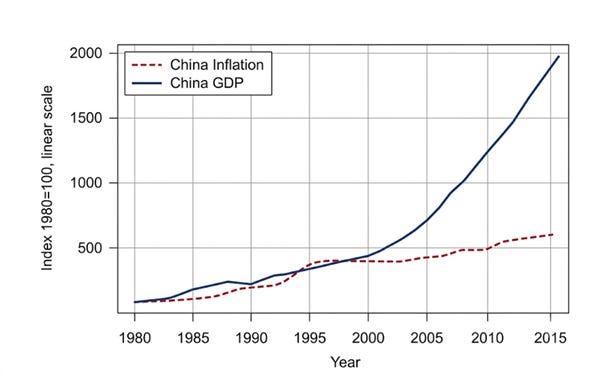
In 1987, the market prices of thirteen basic producer goods were 115 percent above plan prices. Rising prices of industrial inputs put upward pressure on all other goods. The first months of 1988 saw a rise in the overall consumer price index unprecedented in the reform period. Weber writes:
It should be noted that although Delfim Netto is not portrayed typically as a shock therapist, his so-called “economic miracles” for Brazil between the year 1967 and 1974 just so happened to overlap with Brazil’s military dictatorship which lasted from 1964 to 1985. Not irrelevant to these developments, Operation Condor was in operation within Latin America, including Brazil throughout the 1970s to 1980s. This was the role model that George Soros was suggesting the System Reform Institute use for China… Recall that the System Reform Institute was created as a think tank by Zhao Ziyang and acted as his brain trust. Accusations against the System Reform Institute, as a result of this trip to Latin America, was that one of the core lessons they took from their “field work” was that high inflation was considered “inevitable”, even necessary, during China’s period of reform. It did not help Zhao Ziyang’s case that he had made remarks that some degree of inflation and corruption were inevitable during China’s reform period, as if the degree of inflation and corruption China was experiencing were at acceptable levels, which they were most certainly not. Zhao would reaffirm this rather flimsy stance in one of his letters of appeal against his imprisonment (post Tiananmen Square debacle), writing that “though inflation hit in 1988, I believed that the condition was neither all that grave, nor so difficult to resolve.”[51] Strange words for someone who actual met with student protesters at Tiananmen Square and said that the government was to blame for corruption which was a direct result of Zhao Ziyang’s promotion of the dual-track price system which also brought in hyperinflation. Weber attempts to make an apologist stance for Zhao Ziyang and his System Reform Institute members, that the accusations around their Latin American tour were misconstruing their stance on inflation as “inevitable”. However, the fact of the matter is that inflation was grave as well as the levels of corruption, and if the matter was not “so difficult to resolve” why wasn’t it resolved rather than allowed to grow and fester to a pitch peak by the year 1989? Zhu Jiaming a prominent member of the System Reform Institute that went on this George Soros tour of Latin America was in fact in favor of a big bang (i.e. shock therapy) by the year 1988.[52] ‘In his report on their study tour in Latin America, Zhu stressed the lessons of Pinochet’s Chile. Ironically, Zhu had come very close to Wu Jinglian’s take on reform, with their views diverging, however, on timing and the need for austerity measures.’[53] Zhu Jiaming writes in his “Crossroads of China’s Reform”:
This in fact is not true of the Pinochet case study, that excessive inflation can be avoided with the shock therapy prescription. Pinochet’s Chile only corrected inflation when they stopped following the prescription of shock therapy as we will see later in this series. Weber writes:
Right…. Can you really be a supporter of Pinochet and not be for shock therapy? Thus, two prominent members of the System Reform Institute are on record as being pro-Pinochet, with one being outright pro-big bang. The entire group appears to admire Brazil’s military dictatorship which was the apparent highlight of their Latin American tour, if not also Chile’s military dictatorship. In this context, why would we believe that the outcome of hyperinflation from their very policies that Zhao Ziyang was pushing forward was not in fact the very intention of said policies, an outcome on the same lines as shock therapy? This economic instability would create the grounds for massive political instability allowing the greatest potential for a regime change and opened the gates to the Tiananmen Square debacle. Wasn’t that the true goal the entire time?
You can read the next instalment to this series here:
Cynthia Chung is the President of the Rising Tide Foundation and author of the books “The Shaping of a World Religion” & “The Empire on Which the Black Sun Never Set,” consider supporting her work by making a donation and subscribing to her substack page Through A Glass Darkly. Also make sure to watch our RTF and CP films and documentaries here.
Footnotes:[1] Naomi Klein (2007) The Shock Doctrine: The Rise of Disaster Capitalism [2] You can read my paper on Operation Condor here: “How Panama Became the SKYNET for Orwellian Totalitarianism in the Americas (or Why Green Berets in Panama have never been a good thing)” [3] I have written extensively in favour of the economic school known as the “American System,” led by notable economists such as Mathew Carey and his son Henry C. Carey. I stand by the principal universal lessons they wrote extensively about. You can access my writings on this here and here, as well as a three-part series I did here.
However, their writings were published during the 19th century period, since then the world has grown in complexity, and thus though the principals of the American System economic school (which were adopted throughout the world under Germany’s Friedrich List, China’s Sun Yat-sen, Japan’s Meiji Restoration and Russia’s Trans-Siberian Rail project) still hold true, this truth is not contained within a rigid doctrine and thus can and must be lawfully built and expanded upon. We live in a world where this is an absolute necessity, but we have fallen behind on this endeavour and are in great need of economists to carry out the better traditions of this field, that do not lie in any one school or nation but rather, has been a work in progress within many cultures and civilizations throughout the centuries. The American System school itself having much of its origins in France’s Colbertism for instance. [4] The story of the P2P crisis will be discussed in Part IV of this series. [5] Those who have read my book “The Shaping of a World Religion: From Jesuits, Freemasons & Anthropologists to the Ghost Dance Religion” will find uncanny similarities in these stories. [6] For more on this refer to the prologue of this series. https://cynthiachung.substack.com/p/guanzi-an-introduction-of-3000-years [7] D.B. Wagner (1997) The Traditional Chinese Iron Industry and Its Modern Fate [8] Isabella Weber (2021) How China Escaped Shock Therapy: The Market Reform Debate, pg. 36-37 [9] Chen Yun had stated to the Government Administration Council of the CPC, back on April 7, 1950: “Rising prices are not good, falling prices, too, are not good, for production. It is better to be groping for stones to cross the river more steadily.” [10] Isabella Weber (2021) How China Escaped Shock Therapy: The Market Reform Debate, pg. 119-120 [11] Weber, pg. 4 [12] International Monetary Fund, World Bank, Organisation for Economic Co-Operation and Development (OECD), and European Bank for Reconstruction and Development (1990). The Economy of the USSR: Summary and Recommendations. [13] Note to readers: I will be quoting heavily from Isabella Weber’s book “How China Escaped Shock Therapy” since there is a great deal of research in this work that is extremely useful, however, I would like to make a disclaimer here that I am not a proponent of Weber’s overall outlook on economic policy which originates from the New School Economics which has its foundation in John Dewey economics as well as John Maynard Keynes. Again I suggest readers look into my paper on Mussolini and Sorel where I also discuss the relevance of Dewey. It is for these reasons that Weber ultimately has an apologist stance towards Zhao Ziyang and members of his think tank the System Reform Institute who worked closely with George Soros. Even though Weber takes a very critical stance of shock-therapy throughout her book, she exposes herself as ultimately sympathetic to their view and acknowledges at the end of her book that lead members of the System Reform Institute were not only pro-Pinochet but ultimately pro big bang, i.e. shock therapy. Weber thus reveals to her readers, as if this were an inconsequential aside at the very end of her book, that the entire economic debate between Zhao Ziyang’s think tank, the System Reform Institute, and the pro-package reformers was controlled opposition, since they both were ultimately for the same outcome, the story of which this paper will lay out in great detail. Weber also masks the true story behind the dual-track price system and offers a sophist explanation that it was a lawful transition from the multi-tier price system (which it was not), thus, giving the impression to her readers that the dual track price system was a sort of continuation of Guanzi principles, which it was not. She also masks that it was in fact Zhao Ziyang who was responsible for bringing this forward. The dual-track price system was meant to fail, in order to create economic and then political instability that resulted in the Tiananmen Square debacle, which would then create what was hoped to be a friendly political climate to bring in package reform along with regime change. If you are confused as to why Weber would do such a thing I again suggest you review Chapter 13 from my book. Keynes, Dewey and Hayek are all economic schools masquerading as an alternative to the other, when in fact they are for the same outcome and were created consciously so to appear as alternatives. For more on this see Matthew Ehret’s paper ‘The Keynes vs von Hayek Debate: A False Dualism with Malthusian Characteristics’. That being said, Weber is quoted extensively in this paper since her research and documentation are nonetheless useful as a record of events, as long as you keep in mind that this is in fact the background in which she is operating in.
[14] Weber, pg. 5-7 [15] Weber, pg. 7 [16] Weber, pg. 8 [17] Weber, pg. 127-128 [18] According to the Asia Global Institute headquartered in Hong Kong: “Edwin Lim is the Co-Director of the China Economic Research and Advisory Programme [of the Asia Global Institute], alongside Nobel Laureate Michael Spence. Prior to this, he had worked at the World Bank since 1970, serving as the Bank’s Lead Economist for China from 1980 to 1990. Mr. Lim established the World Bank’s office in China in 1985 and served as its first Director from 1985 to 1990. He was subsequently the World Bank Director for Western Africa and for India. In 1994, Mr. Lim took leave from the World Bank to lead the founding of China’s first international investment bank -- China International Capital Corporation -- and served as its first CEO. Mr. Lim has an AB from Princeton University and a PhD in economics from Harvard University.” Source: https://www.asiaglobalinstitute.hku.hk/agd/speakers/edwin-lim [19] Weber, pg. 127-128 [20] Weber, pg. 128-131 [21] Wu Jinglian, and Ma Guochuan (2016). Whither China? Restarting the Reform Agenda. Oxford: Oxford University Press. [22] Weber, pg. 131 [23] Weber, pg. 131-134 [24] Weber, pg. 132 [25] Wu Jinglian, and Ma Guochuan (2016). Whither China? Restarting the Reform Agenda. Oxford: Oxford University Press. [26] Weber, pg. 134 [27] Sik, Ota (1982). Angst vor dem Machtverlust. Wirtschaftwoche, 35(5), 56-59. [28] Weber, pg. 136 [29] Weber, pg. 136-139 [30] Weber, pg. 142 [31] Weber, pg. 143 [32] Weber, pg. 185 [33] This was discussed in the prologue of this series which can be read here: https://cynthiachung.substack.com/p/guanzi-an-introduction-of-3000-years [34] Weber, pg. 164 [35] Cited in Weber, pg. 176 [36] Weber, pg. 188 [37] Zhao Ziyang (2016). A Tentative Plan for Economic System Reform in the Next Two Years, 11 March, 1986. In Collected Works of Zhao Ziyang (1980-1989): Vol. 3 (1985-1986). [38] Ibid. [39] Weber, pg. 201 [40] Wu Jinglian, and Ma Guochuan (2016). Whither China? Restarting the Reform Agenda. Oxford: Oxford University Press. [41] Program Office (Office for Researching a Reform Programme of the State Council) (1986, April 25). Basic Outline for Reform in the Next Two Years. Unpublished document. Source: Isabella Weber [42] Weber, pg. 203-204 [43] Weber, pg. 204 [44] Weber, pg. 215 [45] Weber, pg. 225 [46] Weber, pg. 226 [47] Weber, pg. 227-229 [48] Wu Jinglian, Zhou Xiaochuan, Lou Jiwei, Li Jiange, Liu Liqun, and Shi Xioamin (1988). A Comprehensive Vision to Carry Reform Forward. Reform, 1, 67-76. [49] Weber, pg. 233-234 [50] Weber, pg. 243-245 [51] Zhao Ziyang (2009). Prisoner of the State: The Secret Journal of Zhao Ziyang (1st ed.). [52] Zhu Jiaming (2013). Crossroads of China’s Reform. [53] Weber, pg. 246 [54] Zhu Jiaming (2013). Crossroads of China’s Reform, pg. 526-527 [55] Weber, pg. 247
|






![[My New Book is Out!] The Shaping of a World Religion: From Jesuits, Freemasons and Anthropologists to the Ghost Dance Religion vol. I](https://substackcdn.com/image/fetch/$s_!Zb-5!,w_140,h_140,c_fill,f_webp,q_auto:good,fl_progressive:steep,g_auto/https%3A%2F%2Fsubstack-post-media.s3.amazonaws.com%2Fpublic%2Fimages%2F4fda29e5-31f6-44f7-bcb0-e615c8f9fc26_572x409.jpeg)




![[My Book is Out] The Empire on which the Black Sun Never Set: The Birth of International Fascism and Anglo-American Foreign Policy](https://substackcdn.com/image/fetch/$s_!UYtE!,w_140,h_140,c_fill,f_webp,q_auto:good,fl_progressive:steep,g_auto/https%3A%2F%2Fsubstack-post-media.s3.amazonaws.com%2Fpublic%2Fimages%2F2769e709-e1b1-4f81-8784-032835e640b0_1600x1000.jpeg)




Subscribe to:
Posts (Atom)
-
Boundaries are the backbone of respect. ...
-
Yernasia Quorelios posted: " In the dream, I was queued with my friends waiting to be seated at a formal dinner that wa...
-
The quiet work always shows up eventually. ...

