In this RTF Lecture, Matt Ehret introduces the second lecture of his two-part series on the topic of classical painting with a focus on the political fight to establish a new type of nation on the earth premised upon the belief that each individual is sovereign. This political ideal requires of course an integration of the emotions and reason which only art can provide. The rise and fall of the Hudson River School of American painting is treated in this lecture along with the perverse school of British imperial art which emerged with the figure of John Ruskin, the Pre-Raphaelite Society, hyper-realism and its twin impressionism is also outlined at length in this presentation.  You can watch Part I of this lecture series below: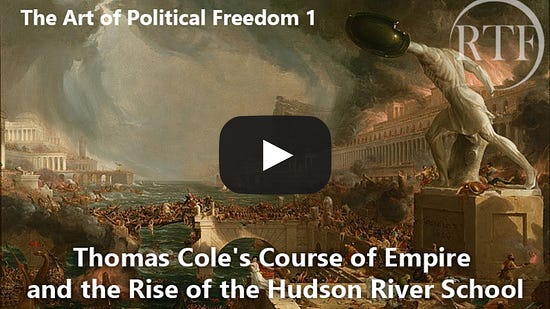 The Rising Tide Foundation is a non-profit organization based in Montreal, Canada, focused on facilitating greater bridges between east and west while also providing a service that includes geopolitical analysis, research in the arts, philosophy, sciences and history. Consider supporting our work by subscribing to our substack page and Telegram channel at t.me/RisingTideFoundation. Also watch for free our RTF Docu-Series “Escaping Calypso’s Island: A Journey Out of Our Green Delusion.” You're currently a free subscriber to Rising Tide Foundation. For the full experience, upgrade your subscription.
|
Wednesday, December 20, 2023
The Art of Political Freedom Part II: Alexander von Humboldt and the Hudson River School





Subscribe to:
Post Comments (Atom)
The Ugly Truth of Teddy Roosevelt: An Art of Liberty Short
Matt Ehret joined up with Peyman Askari on In Lay Terms to delve into the important role that Ideas play in shaping Universal History, and ...

-
Boundaries are the backbone of respect. ...
-
On Sunday March 1, 2026, The Rising Tide Foundation hosted the poet, philosopher, lawyer and essayist Carey Jobe in an examination of Sha...
-
As modern poetry has often been stereotyped as focusing primarily on subjective concerns, this week’s RTF guest lecturer Hall Gardner wil...


No comments:
Post a Comment